

WHAT IS CLOUD STORAGE?

SO HOW DOES IT WORK?
- Regulate a base of storage located at several discrete sites as a monitoring techniques and administrative is far better.
- Have thousands of separate servers that are connected in a grid configuration
- For data sharing, upload the files in the cloud and share the link.
- They are encrypted when stored in the data centre.
CAPACITY OF CLOUD STORAGE
- The amount of space available through cloud-based services provided by Google, Amazon, Facebook, Apple and Microsoft is confidential.
- But considering the wealth of space and data, we can reach a rough estimate of at least…
1 EXABYTE
(which are the same as…)
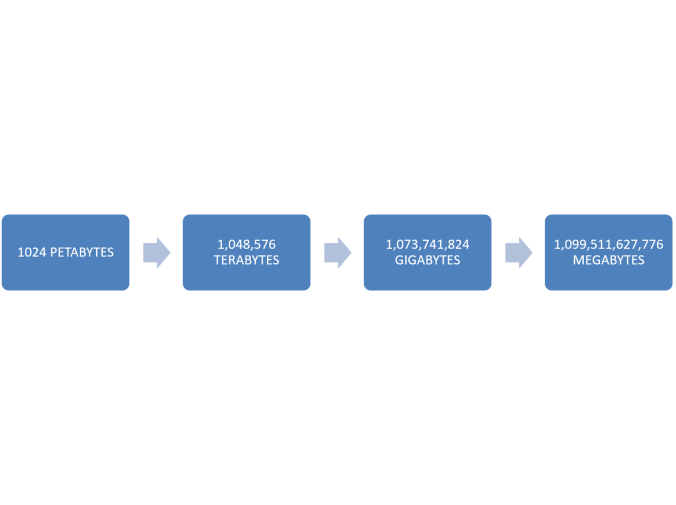
THINGS YOU CAN GET WITH 1EXABYTE OF CLOUD STORAGE
1.4.2 million of 256 GB Macbook Pro hard drive
2.16.8 million of 64 GB iPhone 4S
3.213.4 million of 5 GB HD movie files
4.268.4 million of 4 GB Flash drive
5.1.6 billion of 700 MB of 80 minute compact disc
6.14.1 billion of 78 MB Carly Rae Jepsen ‘Kiss’ album
7.180.2 billion of 6.1 MB Hi-Res photo
8.366.5 billion of 3 MB MP3
EXAMPLES
HARD DISKS
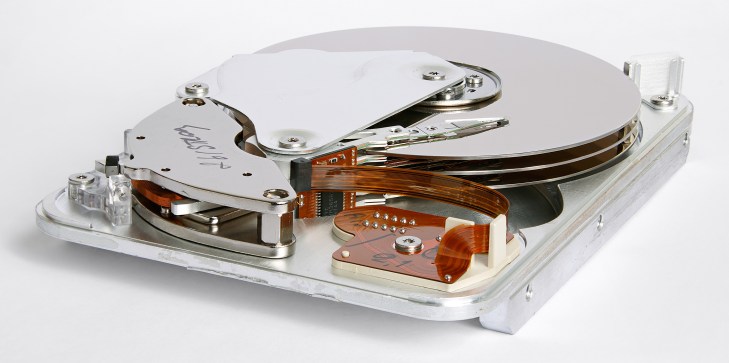
WHAT IS HARD DISK?
- Magnetic disk on which you can store computer data.
- Term ‘hard’ is used to differentiate it from a soft disk.
- Store digital information
- often called a “disk drive,” “hard drive,” or “hard disk drive,” that stores and provides relatively quick access to large amounts of data on an electromagnetically charged surface or set of surfaces
RAM VS HARD DISK
- RAM is smaller and more expensive.
- RAM is much faster.
- RAM is volatile and it need power supply
HOW DOES A HARD DISK WORK?
- Hard disks store digital information in a relatively permanent form.
- Each one of those areas in platter can be independently magnetized (to store a 1) or demagnetized (to store a 0).
- If you magnetize a nail, it stays magnetized until you demagnetize it.
- The computerized information (or data) stored in your PC hard drive stays there even when you switch the power off.
- There is a circular “plate” of magnetic material called a platter divided into billion of tiny areas.
- Each one of those areas can be independently magnetized(to store a 1) or demagnetized(to store a 0).
- They store changing digital information in a relatively permanent form.
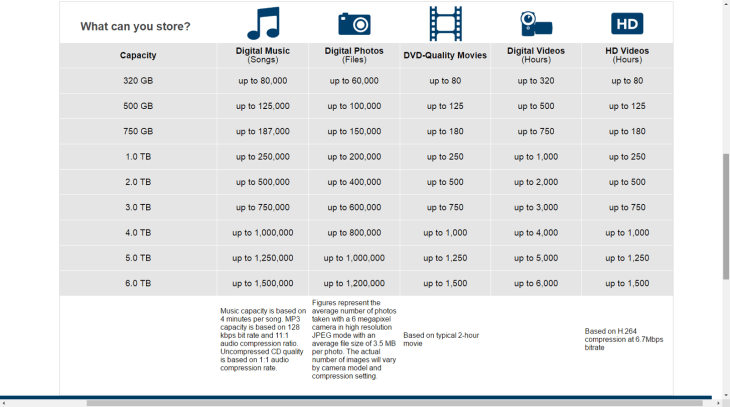
WHAT CAN YOU STORE IN A HARD DISK?
- Standard storage for a hard disk from 500gb to 3 terabyte.
- A hard drive is like a scale. It doesn’t know the difference between things that are on it; it only knows their size. But instead of kilograms, a hard drive measures things in terms of megabytes (MB), gigabytes (GB) and terabytes (TB.)
MAGNETIC STRIPE CARDS & SMART CARDS
- Magnetic Stripe Card


-Its usually stores account number, customer personal
identification number and other such information,
card swipe machines(magnetic stripe readers)
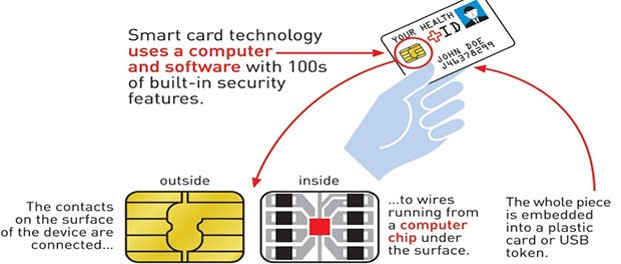
- Smart Card


– Is a pocket sized card with embedded integrated
circuit.
HOW DOES THESE CARDS WORK?
- Magnetic Stripe Card
– The magnetic card reader uses a specific component to
read data from a magnetic card, which is referred to as the
read head.
- Smart Cards
– Secure identity application.
– Can scan electronically and save printed business
card.
CAPACITY
- Magnetic Stripe Card
– The kiloamperes per-metre is the measurement of the card
resistance to passes through magnetic stripe readers ,
which represents reliability and durability of a card.
- Smart Card
-The maximum storage capacity of it will be 8K-128K
bit. One thousand bits will normally store 128
characters.
MEMORY CARDS


What Are Memory Cards?
- Alternatively referred to as a flash memory card, a Memory cardis a type of storage media that is often used to store photos, videos, or other data in electronic devices
-
- An electronic flash memory data storage device used to store digital information.
- Commonly used in portable digital devices such as digital cameras, laptop computers, tablets etc.
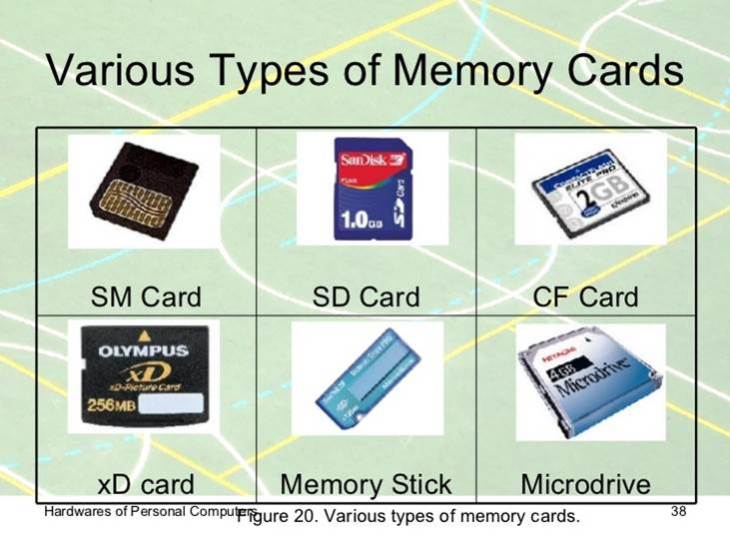
- Types of memory cards include PCMCIA, CompactFlash, SD Card, MiniSD, xD-Picture Card and others.
Capacity Of Memory Cards
- Minimum storage of 2 GB.
- Maximum storage have recently been released by SanDisk which a whopping 512GB !
So How Do Memory Cards Work?
- Firstly, data is stored in the memory card in the device.
- After that the compatible device is either connected to a computer using an appropriate cable or the memory card is inserted into a compatible slot of a computer.
- The computer recognizes that a device has been connected and a dialog box should appear and then the data can be transferred into the computer.
FUN FACT!!
- Memory cards have a maximum theoretical storage capacity of 2 terabytes (TB) , and today the industry just got one step closer towards hitting that limit.
- Memory cards are used in almost any mobile device like tablets and phones and even digital cameras
Optical Disks
What in the world is in optical disk?
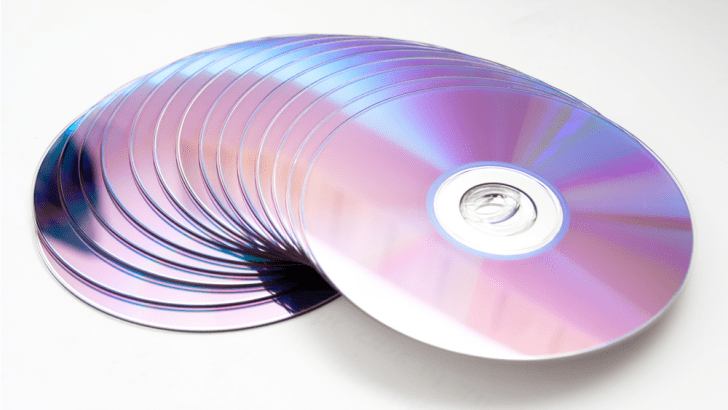
- Is an electronic data storage medium that can be written to and read using a low-powered laser beam.
- The first optical disk, created by James T. Russell, stored data as micron-wide dots of light and dark.
- Several types are CDs, DVDs and Blu-rays.
As removable media, optical disks superseded the earlier magnetic disk cartridges
Magnetic Disk Cartridges (aka Casette Tapes)


- Optical disks are usually between 7.6 and 30cm, with 12cm being the most common size.
- A typical disc is about 1.2mm thick, while the track pitch ranges from 1.6mm (for CDs) to 320mm (for Blu-ray disc).
- The encoding material sits atop a thicker substrate which wakes up the bulk of the disc and forms a dust defocusing layer.
- Optical disk are form with a laquer on top aluminium reflective layer in the middle and polycarbonate substrate as the last layer.
NOW WE KNOW WHAT IT IS, SO HOW DOES AND OPTICAL DISK FUNCTION?
- The optical disk is put in a CD player.
- In the CD player, there is a miniature laser beam (semiconductor diode laser) and a small photo electric cell (electronic light indicator).
- When you press play, an electric motor makes the disk rotate at high speed (up to 500 RPM).
- The laser beam switches on and scans along a track with the photocell from the centre of the CD to the outside.
- The motor slows the disk down gradually as the laser scans the disk from the centre to the outside.
- The laser (RED) flashes up onto the shiny underside of the CD bouncing of the pattern of pits and bumps and lands on the flat areas of the disk.
- The laser (RED) flashes up onto the shiny underside of the CD bouncing of the pattern of pits and bumps and lands on the flat areas of the disk.
- The lands reflect the laser straight back while the pits scatter the light.
- Every time the light reflects back, the photocell (blue) detects it. Realize it seen a land and sends a burst of electric current to an electronic circuit (green) that generates the number one.
- When the light fail to reflect back, the photocell realizes that there is no land and doesn’t register anything.
- So the electronic circuit generate the number zero.
-
- Thus, the scanning laser and electronic circuit recreate the pattern of zeroes and ones that were originally stored on the disks in the factory.
Another electronic circuit in the CD player (Analog Converter) decodes this binary numbers and convert them back into a changing pattern of electric currents

PROS AND CONS OF OPTICAL DISKS
PROS
- Very cheap to produce.
- Most computer can read CD.
- Fairly fast to access the data-quicker than magnetic tape.
CONS
- Smaller storage capacity than a hand drive or DVD.
- Slower to access than the hard disk.
One of my all time favourite storage method is vinyl records . The reason being is that most people consider it the meca of music quality they say the sounds that come out of the vinyl record is the purest and clearest of sound so i a m very fond of them
NOTHING BEATS VINYL BABEH!!!!

 Amin's World Of Technology